Last Updated on October 10, 2026
Airweave is a Japanese mattress brand known for its unique Airfiber technology. Unlike traditional memory foam or innerspring mattresses, Airweave uses a highly breathable fiber structure designed to provide firm support and make changing sleeping positions easier. The brand has also attracted attention through its partnerships with athletes and sporting organizations. But is an Airweave mattress comfortable enough for everyday use? Read our Airweave mattress review to find out.
One of the biggest advantages of an Airweave mattress is its washable Airfiber core. The material allows air to circulate and provides a responsive sleeping surface without the deep sinking sensation of memory foam.
However, Airweave mattresses generally feel firmer than many conventional beds. That makes choosing the right model particularly important, especially if you sleep on your side.
In this Airweave mattress review, we’ll cover construction, firmness, cooling, comfort, durability, cleaning, warranty, and the current mattress lineup available in 2026.
Technical Specifications of the Airweave Mattress
The following specifications describe the original Airweave Mattress and its Signature configurations. The Advanced and newer Yume collection mattresses have different constructions.
| Features | Airweave Mattress |
| Brand | Airweave |
| Mattress Type | Airfiber-based mattress |
| Core Material | 100% polyethylene Airfiber |
| Outer Cover | Polyester |
| Firmness | Extra Firm in the Signature configuration; softer top options vary |
| Thickness | Approximately 7.9 inches for the standard Signature mattress |
| Cooling | Open, breathable Airfiber construction |
| Motion Isolation | Varies; responsive feel may transfer some movement |
| Edge Support | Firm perimeter, depending on configuration |
| Cleaning | Washable Airfiber core; follow instructions for each cover layer |
| Sleep Trial | 60 nights for qualifying purchases |
| Minimum Trial Period | 14 nights |
| Return Fees | Generally $199 transportation fee plus 15% recycling fee |
| Warranty | 10-year limited mattress warranty |
| Delivery | Freight shipping; delivery commonly takes 2–3 weeks |
| Best Suited For | People who enjoy firm, responsive sleeping surfaces |
| Availability | Signature models being phased out in 2026 |
| Related Product |  Check Airweave Top Mattress Classic on Amazon Check Airweave Top Mattress Classic on Amazon |
Important: The Amazon listing above is for an Airweave mattress topper, not necessarily the complete Airweave Mattress. Check the exact product name, size, and specifications before buying.
Airweave Mattress Review 2027: Features and Performance
Airweave has changed its mattress lineup over the years. The brand originally became known for its firm Signature mattresses, but it now offers more customizable designs.
In January 2026, Airweave announced that its Signature collection would be phased out. The company continues to feature remaining Signature stock alongside its newer Yume collection.
Let’s look at the main features and how they affect sleeping comfort.
[toc]
Construction
The original Airweave Mattress has an unusual design compared with conventional mattresses.
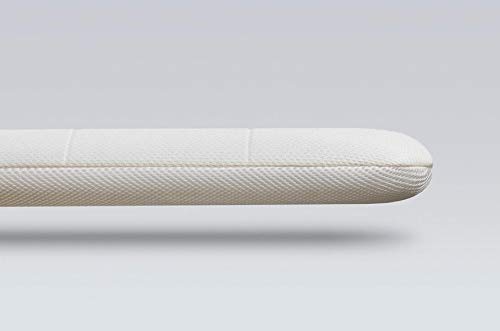
Instead of using memory foam or pocketed coils, it features a polyethylene Airfiber core. Thousands of interwoven fibers create a supportive structure with plenty of open space for airflow.
The standard Signature mattress is approximately 7.9 inches thick and has a polyester outer cover.
Its Airfiber structure provides a firm, responsive surface. When you move, the material recovers quickly rather than slowly contouring around your body.
Airweave also offers an Advanced Mattress with separate Airfiber blocks. These blocks can be arranged to adjust support beneath different body areas.
The newer Yume models take customization further with different comfort layers and configurations.
Keep in mind that construction varies between models. You shouldn’t assume every Airweave mattress contains the same number of Airfiber blocks or comfort layers.
Durability
Airweave uses a resilient polyethylene fiber structure designed to recover after pressure is removed.
This material doesn’t behave exactly like memory foam. It returns to shape quickly and offers a more consistent, responsive feel.
However, mattress durability depends on body weight, foundation support, maintenance, and how frequently the mattress is used.
The old claim that every Airweave mattress will last 10 to 15 years is not something buyers should treat as a guarantee.
Airweave offers a 10-year limited warranty for eligible mattresses, but warranty length and actual comfort lifespan are not the same thing.
Firmness
Firmness is one of the most important factors in our Airweave mattress review.
The Signature Airweave Mattress is designed to feel extra firm. Unlike some traditional foam mattresses, it allows relatively little deep sinkage.
This can be appealing if you prefer sleeping on top of the mattress rather than sinking into it.
However, not everyone enjoys an extra-firm surface.
Lightweight side sleepers may experience uncomfortable pressure around their shoulders and hips.
Airweave offers additional comfort configurations, including Luxe and Pillow Top options on selected mattresses, for people who want more cushioning.
The Advanced Mattress also allows users to adjust the arrangement of its support blocks.
If you enjoy a softer mattress, don’t choose the Signature Extra Firm configuration without trying it first. Our guide to choosing a firm mattress explains how your sleeping position and body weight affect the firmness you may need.
 Check Price on Amazon
Pressure Relief
Pressure relief depends on how evenly a mattress supports your body.
Airweave’s responsive fiber system distributes pressure differently from conventional memory foam.
For back and stomach sleepers who prefer a firm surface, this can provide a comfortable and supportive feel.
However, side sleepers generally need more cushioning around their shoulders and hips.
Some Airweave configurations may feel too firm for them, especially if they have a lighter build.
Models with additional comfort layers or adjustable support may be more suitable.
A mattress can offer strong support without necessarily providing enough pressure relief for every sleeper.
Motion Isolation
Motion isolation matters when you share a bed with someone who changes positions frequently.
Airfiber is responsive and springs back quickly after movement.
Although its construction can absorb some movement, it doesn’t behave like slow-response memory foam.
As a result, some sleepers may notice movement from their partners.
If motion isolation is your highest priority, compare Airweave with the options in our memory foam mattress reviews. Some all-foam mattresses absorb movement more effectively.
Edge Support
The Airweave Mattress has a relatively firm structure that helps maintain support near the edges.
People who regularly sit on the side of their bed may appreciate this feature.
However, edge support depends on the mattress model, its thickness, and the surface underneath.
Don’t assume that the edges will never compress.
If possible, try sitting near the perimeter before deciding whether the mattress provides enough stability for your needs.
Temperature Regulation
Cooling is one of Airweave’s most appealing features.
The Airfiber core has a highly open structure that allows air to pass through the mattress.
This can reduce some of the heat buildup associated with dense foam materials.
Airweave also offers mattresses with different comfort layers, which can affect the overall temperature feel.
However, no mattress guarantees that you’ll sleep cool in every environment.
Room temperature, sheets, mattress protectors, and individual sleeping habits all influence comfort.
Sinkage and Responsiveness
Airweave mattresses generally feel very responsive.
When you change positions, the Airfiber material quickly returns to its original shape.
This makes movement easier than on some deeply contouring memory foam mattresses.
Back, stomach, and combination sleepers who enjoy a firmer surface may particularly appreciate this feeling.
However, people who want to feel cradled by a soft mattress may prefer another construction.
Noise
Airweave mattresses don’t use traditional metal springs in their Airfiber support systems.
That removes one common source of mattress squeaking.
However, Airfiber and cover materials may still make some sound during movement.
If you hear repeated creaking, check your bed frame and foundation as well.
Off-Gassing
Airweave uses polyethylene Airfiber rather than conventional polyurethane memory foam in its core.
Because of this, the mattress may have a different initial odor from a typical foam bed.
However, it would be incorrect to say that Airweave mattresses can never produce any smell.
New materials and packaging can have temporary odors. Ventilate the room and follow the manufacturer’s setup instructions.
Cleaning and Maintenance
One of the most unusual features of an Airweave mattress is its washable Airfiber core.
On compatible models, the outer cover can be removed and cleaned according to its care label. The Airfiber blocks can also be washed following the manufacturer’s instructions.
However, not every layer can be cleaned in the same way.
For example, the Advanced Mattress has an inner cover containing rayon and glass fiber. Don’t remove or wash that liner unless the manufacturer specifically instructs you to do so.
Never assume that the complete assembled mattress can be placed in a washing machine.
When cleaning Airfiber, use the approved water temperature and drying method for your specific model. Allow the material to dry completely before reassembling the bed.
Regular cleaning is useful, but washability doesn’t make a mattress allergy-proof.
Sleep Trial
Airweave currently offers a 60-night sleep trial for qualifying mattress purchases.
This replaces the older 100-night trial mentioned in previous reviews.
Customers are required to try the mattress for at least 14 nights before requesting an eligible return.
It’s also important to understand that the trial is not entirely free.
Airweave’s current return policy generally includes a $199 transportation fee and a 15% recycling fee. Kiwami 3.0 returns have a higher transportation fee.
The first eligible return may be refunded to the original payment method after applicable deductions. Subsequent returns may receive store credit instead.
Purchases from Amazon or other third-party retailers do not automatically qualify for Airweave’s direct-purchase sleep trial.
Shipping and Delivery
Airweave mattresses generally ship through a freight delivery service because of their size.
The company advises allowing approximately two to three weeks for mattress delivery, depending on the product and destination.
Free standard shipping is available on qualifying orders within the contiguous United States.
Airweave doesn’t provide standard online checkout shipping for all international destinations, Alaska, or Hawaii.
Selected mattresses may also qualify for installation services through an outside provider.
Before ordering, confirm the delivery method and whether assembly, removal of your old mattress, or other services involve extra charges.
Pricing
Airweave mattresses are generally more expensive than many conventional online mattresses.
The brand uses a specialized Airfiber construction and offers additional comfort options on selected models.
Prices vary significantly between the older Signature collection and newer Yume mattresses.
For example, the Nagomi collection is positioned as a more accessible luxury option, while Kiwami is designed for buyers interested in extensive customization.
Before paying for an upgrade, consider whether the additional comfort layers or customization features will actually benefit your sleeping position. Our luxury mattress comparison guide discusses other premium constructions and features worth evaluating.
Warranty
Airweave currently offers a 10-year limited warranty on qualifying mattresses, including the Airweave Mattress, Advanced Mattress, Nagomi, Takumi, and Kiwami models.
The warranty covers specified manufacturing defects, including certain material failures and qualifying indentations.
It doesn’t cover every change in comfort or damage caused by improper use.
The warranty generally applies to the original purchaser and has specific requirements concerning proper support and care.
Mattress toppers and Japanese futons may have different warranty periods.
Review the official Airweave warranty policy before making a purchase.
Advantages of Airweave Mattresses
- Unique, responsive Airfiber construction.
- Breathable design with good airflow.
- Washable Airfiber core on compatible models.
- Supportive feel for people who prefer firmer mattresses.
- Easy to change sleeping positions.
- Customizable options on selected models.
- No conventional coil system in the Airfiber core.
- 10-year limited warranty on qualifying mattresses.
Disadvantages of Airweave Mattresses
- Extra-firm models may be uncomfortable for some side sleepers.
- More expensive than many conventional mattresses.
- Distinctive feel that not everyone will enjoy.
- Motion isolation may not match slow-response memory foam.
- Some models require assembly or rearranging support blocks.
- Return fees can be substantial.
- Not every removable-looking layer is safe to wash.
Who Should Buy an Airweave Mattress?
- Firm mattress lovers: People who prefer sleeping on top of a supportive surface.
- Back sleepers: Those who enjoy responsive support without deep sinkage.
- Some stomach sleepers: People who need a surface that helps prevent excessive hip sinkage.
- Hot sleepers: Those who want a breathable mattress core.
- Combination sleepers: People who regularly change sleeping positions.
- Shoppers interested in washable materials: Those who value a removable, cleanable Airfiber core.
Who Shouldn’t Buy an Airweave Mattress?
- People who love soft memory foam: Airfiber has a firmer, more responsive feel.
- Lightweight side sleepers: Extra-firm models may put too much pressure on the shoulders and hips.
- Budget-conscious buyers: Airweave mattresses can be expensive.
- Buyers seeking fee-free returns: Current return charges may be substantial.
- People who want a conventional mattress feel: Airfiber is different from foam, latex, and traditional springs.
How Will Different Sleepers Feel on an Airweave Mattress?
Side Sleepers
Side sleepers usually need cushioning around their shoulders and hips.
The extra-firm Signature Airweave Mattress may feel uncomfortable for some, particularly lightweight sleepers.
However, Airweave also offers configurations with softer top layers and adjustable support.
If you sleep mainly on your side, compare these options instead of automatically choosing the firmest model. Our mattress recommendations for side sleepers explain how different materials and firmness levels affect shoulder and hip comfort.
Back Sleepers
Back sleepers who prefer a supportive mattress may enjoy Airweave’s responsive construction.
Its firm surface can help prevent excessive sinkage, although comfort depends on body weight and mattress configuration.
People who prefer a little cushioning may want to consider a model with an additional comfort layer.
Stomach Sleepers
Some stomach sleepers benefit from firmer mattresses because they help prevent excessive hip sinkage.
For these sleepers, an extra-firm Airweave configuration may feel comfortable.
However, a surface that is too firm can still create discomfort around the ribs, shoulders, or other pressure points.
The best option is one that provides support without creating unnecessary pressure.
Heavier Sleepers
Heavier sleepers may appreciate a firm mattress, but firmness alone doesn’t determine whether a bed offers enough support.
The mattress must also have suitable materials, dimensions, and weight capacity.
Before choosing Airweave, check the manufacturer’s specifications for your preferred model.
If you need additional help comparing supportive beds, our mattress buying guide for heavier sleepers covers the importance of construction, comfort-layer thickness, and proper support.
Original Airweave Mattress vs. Newer Airweave Models
Airweave’s original Signature products introduced the brand’s washable Airfiber mattress concept. The current collection provides more options for customizing support and comfort.
Original Airweave Mattress
The Signature Airweave Mattress uses a firm Airfiber support core and a relatively simple design.
It may appeal to back and stomach sleepers who prefer extra-firm support and don’t need extensive customization.
However, the Signature collection is being phased out in 2026, so sizes and availability may be limited.
Airweave Advanced Mattress
The Advanced Mattress offers a more customizable construction.
Instead of a single uniform support core, it uses separate Airfiber blocks that can be arranged to adjust firmness in different body areas.
This may be useful for people who need more cushioning around the shoulders while maintaining support beneath the hips and waist.
Airweave has also offered different top comfort configurations, including Signature, Luxe, and Pillow Top options.
Airweave Nagomi
Nagomi belongs to Airweave’s newer Yume collection.
It is designed to provide a more comfortable, layered sleeping experience while maintaining the brand’s responsive Airfiber support.
This may appeal to people who find the older Signature design too firm.
Check the exact Nagomi version before purchasing because Airweave has updated model names and configurations.
Airweave Takumi
Takumi focuses on customizable firmness and body support.
It offers a more advanced layered construction than the original Signature mattress.
This makes it worth considering if you want to fine-tune comfort across different sleeping areas.
Airweave Kiwami 3.0
Kiwami 3.0 is one of Airweave’s premium mattress options.
It emphasizes extensive customization and a more elaborate construction.
However, it also carries a higher price and different delivery and return service fees.
Unless you specifically need its customization features, a less expensive Airweave model may provide better value.
Conclusion: Is the Airweave Mattress Worth Buying?
Airweave stands out because of its breathable, responsive Airfiber technology.
Unlike a traditional memory foam mattress, it provides a firmer surface that recovers quickly when you change positions.
Its washable core is another useful feature, particularly for buyers who value easier mattress maintenance.
However, firmness is a major consideration. The original Signature mattress may be too firm for some side sleepers and people who prefer plush cushioning.
The newer Nagomi, Takumi, and Kiwami collections offer additional comfort and customization options, although prices are generally higher.
Before buying, pay close attention to the 60-night trial, 14-night adjustment period, and return fees. Also, make sure you’re comparing the complete mattress rather than an Airweave topper.
Overall, Airweave is worth considering if you want a firm, responsive, and breathable sleeping surface. Hopefully, this Airweave mattress review has helped you decide whether its unique construction is right for you.
Frequently Asked Questions
1. Is the Airweave Mattress good for side sleepers?
Some configurations may be suitable, but the extra-firm Signature model can feel too hard for lightweight side sleepers. Models with additional cushioning may be more comfortable.
2. Can you wash an Airweave Mattress?
The Airfiber core is washable on compatible models. Covers and liners have separate care requirements, so always follow the instructions for your specific mattress.
3. How long is the Airweave sleep trial?
Qualifying direct purchases currently include a 60-night trial with a minimum 14-night adjustment period. Return fees apply.
4. Does the Airweave Mattress contain fiberglass?
Some models, including the Advanced Mattress, list glass fiber in an inner cover. Do not remove or wash that liner without explicit manufacturer instructions. Check the exact materials of your chosen model.
5. How long does an Airweave Mattress last?
Lifespan depends on construction, body weight, maintenance, and foundation support. Airweave offers a 10-year limited warranty on qualifying mattresses, but that is not a guarantee of ten years of unchanged comfort.
6. Is Airweave better than memory foam?
It depends on your preferences. Airweave provides firmer, more responsive support and strong airflow. Memory foam generally offers closer contouring and may isolate movement more effectively.